How body donation advances surgical training at MERI’s bioskills lab
Most people who think about whole body donation are holding two quiet hopes at the same time. The first is that the decision will be useful to someone after they are gone, and the second is that it will not leave the people they love with a bill, a hard phone call, or one more thing to sort out in the middle of grief. Both hopes are reasonable, and both are things we can walk through with you. Both also lead to the same place: a bioskills lab in Memphis, where a donor’s gift makes surgical training possible.
Once those two hopes settle, the next question tends to arrive on its own. What actually happens after a passing, who learns from this gift, and how can a family be sure their loved one is cared for the entire way through? The honest answer is worth sitting with, because whole body donation has quietly become part of how many people think about the end of life. Cremation now accounts for most end-of-life arrangements in the United States, and a growing share of the people choosing it are also weighing donation as a way to make that final decision count for something. What that decision counts for is concrete: surgeons, nurses, and first responders get to practice on real human anatomy long before they ever practice on you, or on someone you love. The hands that will one day care for a patient in an operating room are hands that learned somewhere first, and a donor is what makes that somewhere possible.
What a bioskills lab actually does
A bioskills lab is a controlled, accredited setting where medical professionals practice on donated human tissue, and it is built to feel less like a classroom than like the real thing. Each donor is positioned with care, the equipment is arranged the way it would be in a hospital, and a faculty member brought in by the company or society sponsoring the course walks the participants through each step. Every station has its own donor, and every donor has a team working at it.
The reason this matters comes down to the gap between studying a procedure and performing one. Simulators, videos, and textbooks are genuinely useful for the fundamentals, but they reach a limit the moment a surgeon has to navigate the specific reality of a living person, where tissue varies from one body to the next, a vessel runs somewhere the diagram never showed it, and a spine simply refuses to behave like a plastic model. The Association for Bioskills Laboratory Excellence puts the stakes plainly: without bioskills training, a healthcare professional risks learning a procedure “on the job,” and newer techniques can carry higher rates of surgeon-related complications when there has been no chance to practice on real anatomy first.
That, stated honestly, is the patient-safety case for whole body donation. The next person on the operating table benefits from the last person who was on it, because a surgeon’s first attempt at a difficult procedure goes better when it is not, in fact, their first attempt. It is also the quiet thread that ties a personal decision to a public good, and if you want the wider context, you can read more about MERI’s medical education and research programs.
Inside MERI’s facility: six labs, one mission
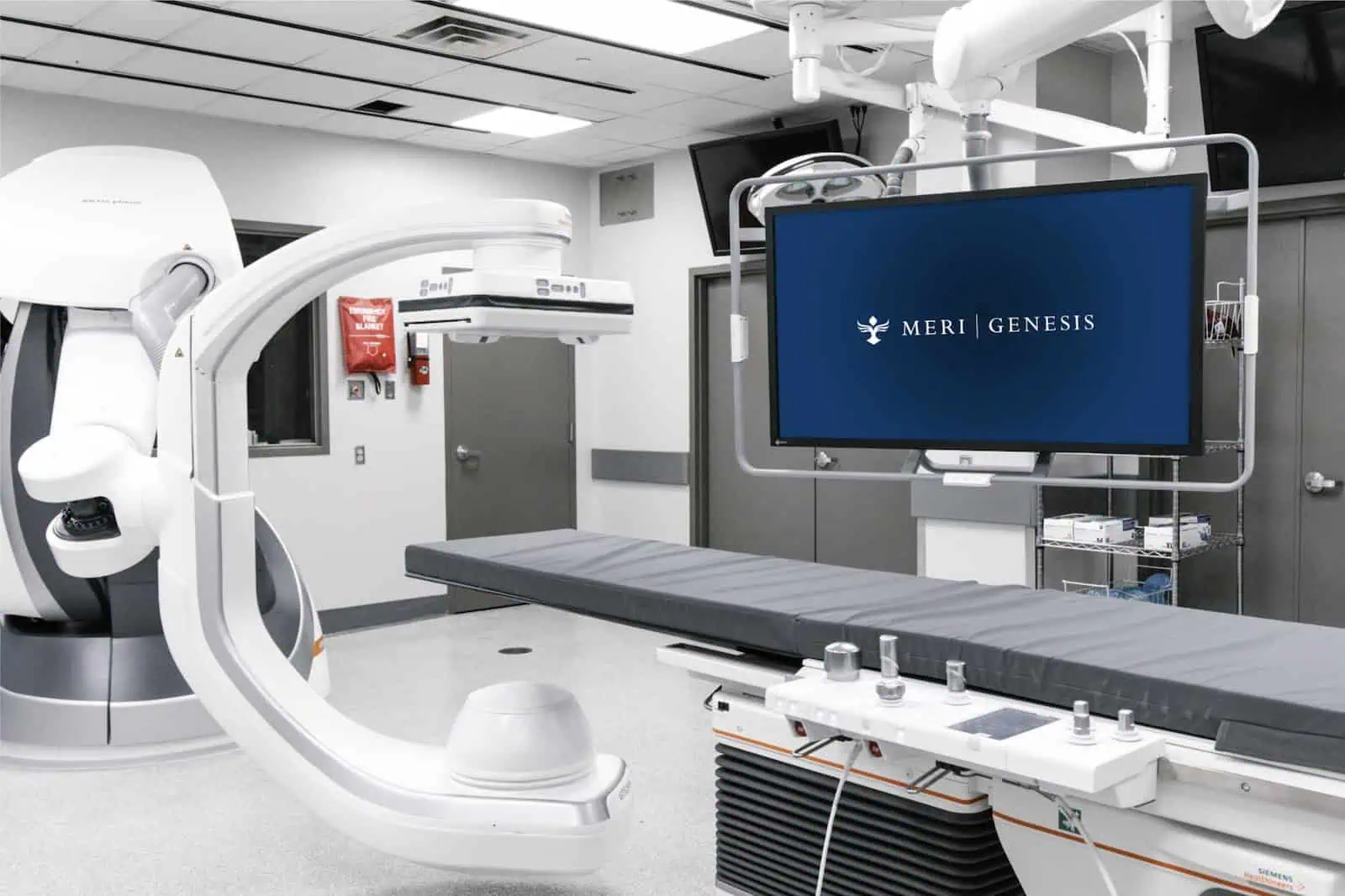
MERI runs six bioskills labs on-site at 44 South Cleveland in Memphis, in the heart of the Memphis Medical District, and the number is worth pausing on. Around those six labs sit an 85-person auditorium, a 65-person multi-disciplinary room, an Artis Pheno angio suite with 3D and rotational imaging, and a Mobile Bioskills Lab with up to ten stations that can travel anywhere in the continental United States and Canada. The on-site equipment runs to C-arms, surgical tables, Stryker power equipment, and high-speed drills, which is the kind of detail that matters more than it first appears.
It matters because six labs means more than one partner organization can run training at the same time, and that, in turn, means the donor whose family said yes becomes part of a real, working operation rather than a single event on a calendar. MERI has been doing this since 1994, when it was founded by the Memphis neurosurgeon Dr. Kevin T. Foley, and in the decades since, thousands of doctors have come to Memphis to train at MERI through programs hosted at the facility.
Through all of it runs one standard the institution holds to without exception: every donor at MERI is treated as a living patient for every procedure. It is the rule the staff works by, and it is the reason a family can trust the rest of what follows.
What happens to a donated body at MERI
The timeline is the part families most want spelled out, because what they are really asking is what will happen, and when, and whether anyone will lose sight of the person along the way. So take a breath, because here is the whole of it, and there is a fuller donor’s-eye explainer of what happens to bodies donated to science if you want even more detail afterward.
It begins with a phone call. After a passing, the family or a legal authorizing party calls Genesis at (901) 278-7841, and the team’s first job is to confirm the donor’s medical suitability at that time. Acceptance is never automatic, because it depends on whether your loved one is free of infectious diseases that could harm the people who will train with them and whether their physical condition can support a safe, high-quality learning experience.
When MERI is able to accept the gift, the program takes on what would otherwise fall to the family: the transportation of your loved one to the Memphis facility, the filing of the death certificate within six weeks, the cremation at the close of the program, and the return of the cremated remains afterward. None of it carries a cost to your family at any stage. Your loved one then remains at the facility for roughly six to twelve months, never embalmed but kept frozen and gently thawed for instruction, and over that time the courses they make possible reach across specialties, from neurosurgery and spine to orthopedics, cardiovascular and vascular work, thoracic procedures, and emergency response. The learners who come for those courses are physicians, surgeons, nurses, and EMTs, and they travel to MERI from across the country.
When the work is complete, MERI arranges the cremation and returns the cremated remains to your family, or, if your family would rather, arranges interment in a mausoleum in the Memphis area. Your family also receives a written summary of the kinds of training and research your loved one helped make possible, which is its own small form of an answer to the question that started all of this.
And once a year, on the last Sunday of September, MERI holds its Donor Appreciation Celebration, the way the institution thanks donor families, with a separate component that honors veterans among the donors. Families are invited, though no one is ever obliged to come, and there is no wrong year to arrive.
The hands-on surgical training a donor’s gift supports
It helps to see what that gift actually goes toward, so here are the kinds of hands-on surgical training that partner faculty carry out at MERI. None of these are MERI’s own courses. In every case the curriculum, the faculty, and any credit are brought in by a visiting device company, a surgical society, or a partner institution, and the donor is what allows the work to happen at all.
The training spans the specialties the facility is built for. There is neurosurgery, and spine work, and a broad range of orthopedic procedures such as joint replacement and fracture repair. Cardiovascular and vascular training leans on the Artis Pheno angio suite, which supports rotational angiography and procedures like angioplasty and stent placement under 3D imaging. None of that is a brochure list, because every category traces back to the same place: a person on a table whose family said yes.
Safety, dignity, and accreditation at MERI
The fear underneath every prospective donor’s questions is usually the same one, unspoken: will my loved one be handled with care, by people who are accountable to someone? MERI’s answer begins with its accreditation by the American Association of Tissue Banks (AATB). Accreditation is not decoration here. It is the practical difference between a facility that can account for every step of how a donation is authorized, screened, handled, and tracked, and one that cannot, and if you want the full account of how every gift is screened and tracked, MERI lays out its AATB accreditation and safety standards in detail.
Alongside that, the institution is approved by the New York State Department of Health, belongs to the Association for Bioskills Laboratory Excellence, and adheres to the Uniform Anatomical Gift Act guidelines, with tissue-consultation staff available around the clock. The sentence the institution returns to in its own writing is the one worth keeping: the donation of tissues after death is a truly extraordinary gift deserving of the highest respect, gratitude, and care. That is not a slogan. It is the standard the staff works by, and it means your loved one stays the person their family knew through every room they pass.
What donors and families can expect from the experience
Whole body donation does not end with a procedure, and the relationship MERI keeps with families is part of what the gift buys. The clearest expression of it is that September Donor Appreciation Celebration, where families are welcomed and the donors are acknowledged by name and role, with veterans honored separately. Beyond the gathering, families receive the written summary of the research and training their loved one supported, and the cremated remains are returned home, or interred in the Memphis-area mausoleum if that is what a family chooses.
What MERI does not do is promise a family how their grief should feel or what their loss should mean. A student or a surgeon will learn from this person, gently and with care, because the donor asked for that to happen, and the family chose to honor it. That is the honest claim, and it is enough.
How to pre-register with Genesis to support medical training
People sit with the idea of whole body donation for months, sometimes years, before they decide, and the reasons they finally do vary as much as the people. Some register after a friend’s funeral leaves them thinking. Others are family members calling Genesis on the hardest day of their lives, trying to honor a wish a loved one wrote down long ago. Every one of those paths is real, and every one of them works.
If you would like to register yourself ahead of time, the place to start is the program information on the Genesis Whole Body Donation Program page. From there you can pre-register for body donation by completing the Genesis consent forms. Tell the people closest to you that you have done it, so they know what to do when the time comes, and keep the Genesis number with the rest of your important papers: (901) 278-7841, or toll-free (877) 288-4483.
This is a private decision and a serious one, and there is no question about it that is the wrong question to ask. When you are ready, we are here. The gift you are weighing is one the next generation of surgeons will be quietly grateful for across the whole of their working lives. MERI’s donor program is the Genesis Whole Body Donation Program, and the line the institution has carried since 2018 says the rest of it as well as anything could. Advancing knowledge. Honoring life.